El Churi · Escobedo de Camargo
A sinkhole the size of a hall
El Pendo sits in a closed karst depression linked to the Peñajorao range, one of the main coastal karst areas of Cantabria. The cave swallows the Pendo stream; after about 12 km underground the water reaches the river Pas.
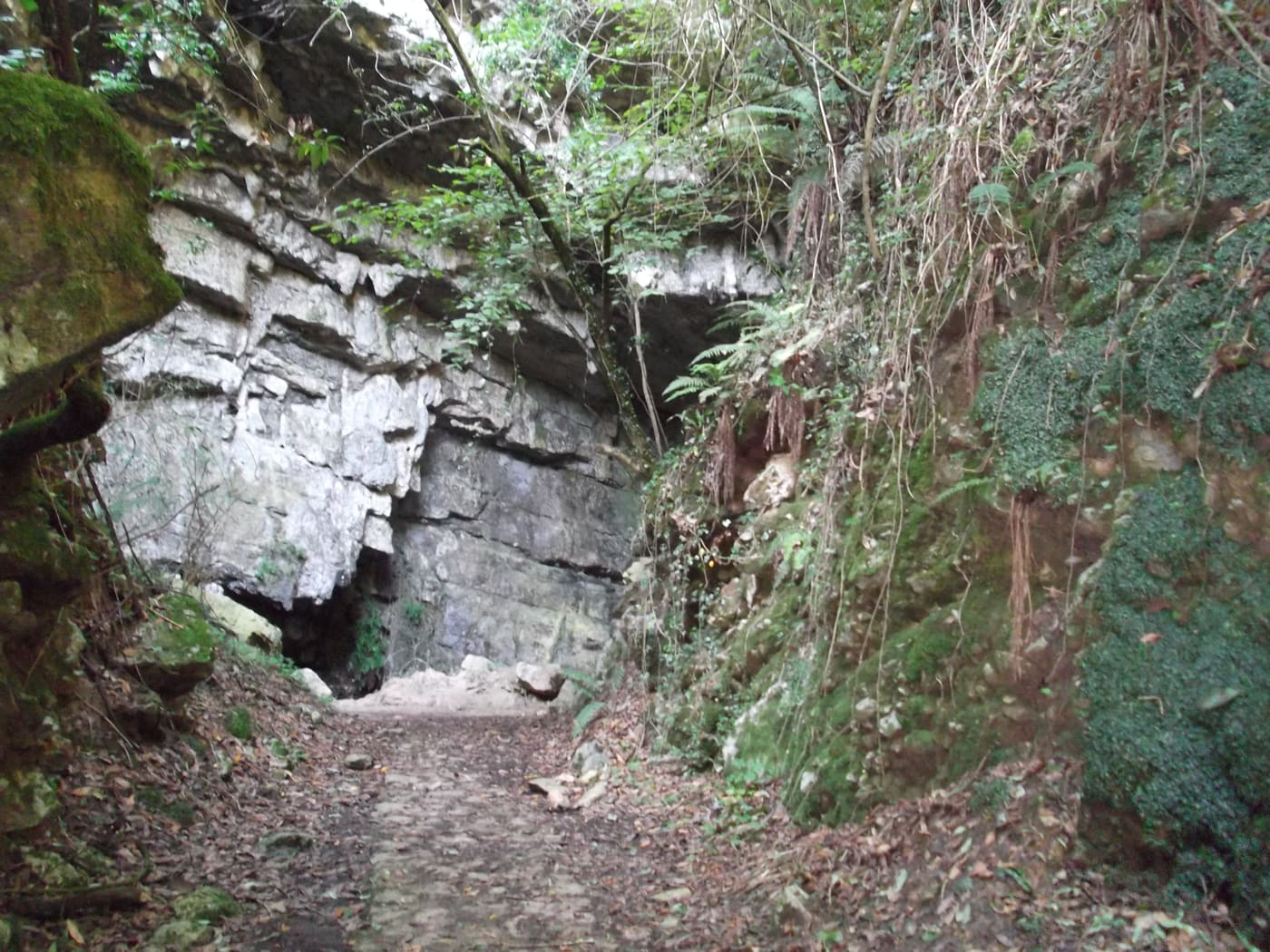
Image: Wikimedia Commons
Why it matters
Along with El Castillo, El Pendo is one of the sequences used to discuss human behaviour and technology from Neanderthals to Homo sapiens in south-western Europe. Official research texts place the start of the deposit at least around 82,000–84,000 BC, with later use into recent prehistory and even ritual deposits in the Bronze Age.
Since July 2008 it has belonged to the UNESCO World Heritage property “Cave of Altamira and Palaeolithic Cave Art of Northern Spain”. Spain listed it as an Asset of Cultural Interest in 1997. Since 2016 the setting is protected as the Pendo-Peñajorao natural area.
Inside
Most of the cave is a large descending hall — about 80 m from the gate to the main painted panel — then a narrowing that ends in a small winding passage. Fallen blocks partly cover the vestibule; more occupation evidence almost certainly lies beneath them.
The archaeological deposit and the Painting Frieze occupy that great chamber. The rear passage holds the 1907 engravings, including a rare bird figure. Portable art from the site — perforated batons and the so-called Venus of El Pendo, a deer-antler pendant more than 17,000 years old — is kept at the MUPAC in Santander.
Always check opening hours, prices and availability on the official booking site.